Sep 28, 2026
How to Choose the Right Commercial Construction Company in Jaipur
Choosing the right construction partner can significantly influence the cost, quality, timeline and long-term performance of a commercial property. Wh...
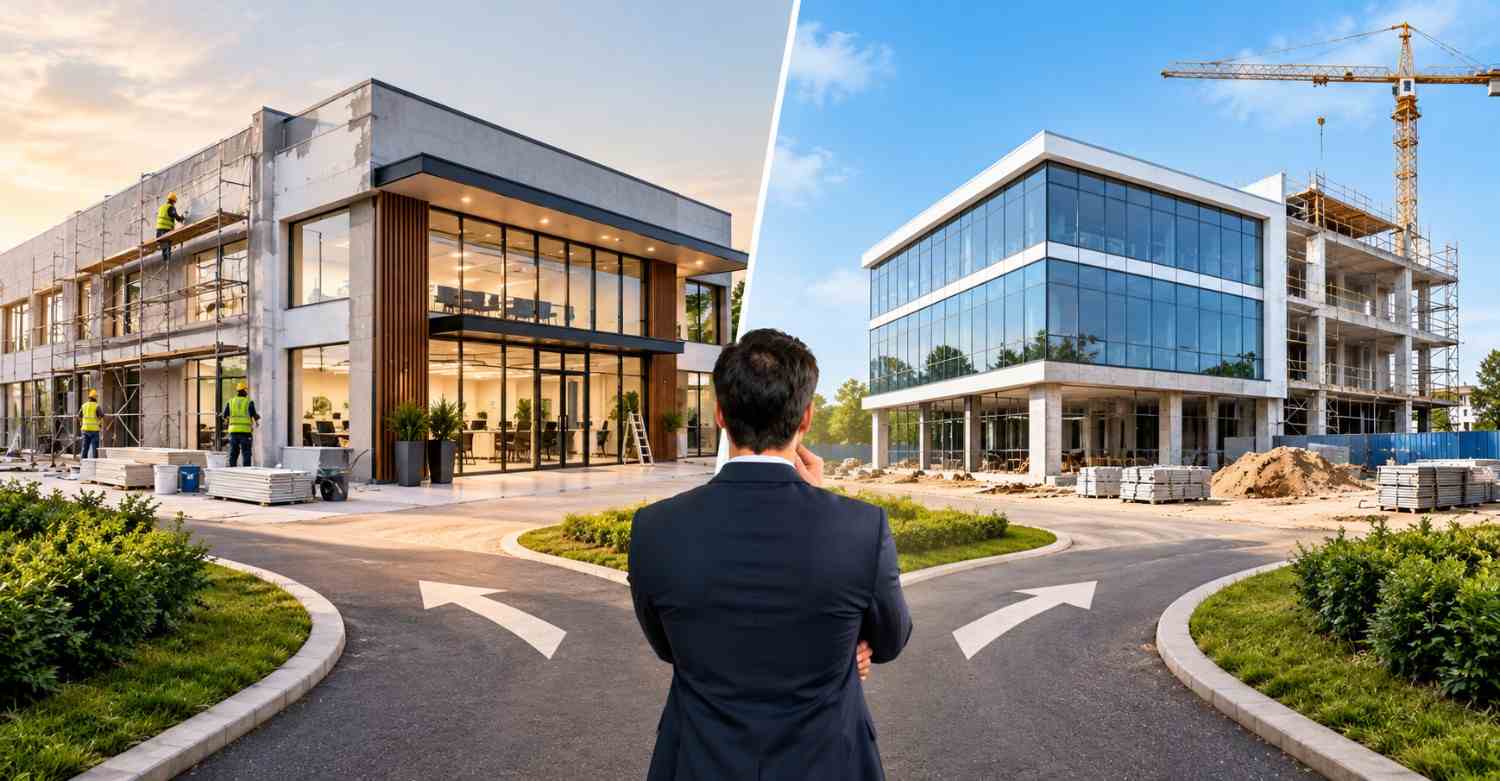
When your commercial property starts feeling outdated, cramped, or unable to support your growing business, one important question comes up: Should you renovate the existing building or start fresh with new construction? Both options can improve functionality, appearance, efficiency, and long-term property value, but the right choice depends on your building’s condition, budget, business goals, and future requirements.
Understanding commercial renovation vs new construction can help you compare the costs, benefits, timelines, flexibility, and long-term value of both options. In this guide, we’ll explain when commercial renovation makes sense, when new construction is a better choice, and the key factors you should consider before making a final decision.
Key Takeaways
Commercial renovation involves improving, modifying or upgrading an existing commercial building without completely replacing the structure.
Renovation can include:
Commercial renovation is often suitable when the existing building has a strong structure but requires modernization or better space utilization.
New construction means developing a commercial building from the ground up on a suitable plot of land. It gives the owner greater control over the building's layout, design, materials, technology and infrastructure.
A new commercial building can be planned specifically for its intended purpose, such as:
New construction is generally considered when the existing property cannot efficiently support the owner's current or future requirements.
| Factor | Commercial Renovation | New Construction |
|---|---|---|
| Existing structure | Uses the current building | Starts from the ground up |
| Initial investment | Often lower, depending on scope | Usually higher |
| Project timeline | Can be shorter for smaller projects | Usually requires more time |
| Design flexibility | Limited by existing structure | High flexibility |
| Construction disruption | May affect ongoing operations | Usually easier to separate from existing operations |
| Customization | Moderate | High |
| Structural limitations | Existing limitations may remain | Designed according to requirements |
| Long-term planning | Depends on existing property | Can be designed for future needs |
Renovation may be the better option when the existing commercial building is structurally sound and its location is valuable.
Consider renovation if:
If the foundation, framework and major structural components are in good condition, renovation can improve the property without completely rebuilding it.
A renovation project may allow you to upgrade the most important areas first rather than investing in an entirely new building.
A well-established commercial location can be difficult or expensive to replace. Renovating the existing property may allow you to retain its location while improving the building.
Outdated interiors, lighting, electrical systems, layouts and facilities can often be upgraded through a properly planned renovation.
New construction can make more sense when the existing building has major limitations or cannot support your long-term business goals.
If the property requires extensive structural repairs, rebuilding may be more practical than continuously repairing an unsuitable structure.
New construction gives you greater freedom to plan floor areas, circulation, parking, services and workspaces according to your business requirements.
A new commercial building can be designed with future growth in mind, including additional floors, larger service areas or adaptable spaces where appropriate.
If upgrading the building would require replacing almost every major system, compare the total renovation cost with the cost and benefits of new construction before deciding.
There is no universal answer.
Commercial renovation can be more cost-effective when the existing structure is sound and only selected systems or spaces need improvement.
New construction can provide better long-term value when renovation would involve extensive structural changes, repeated repairs or major compromises in layout and functionality.
Instead of comparing only the construction price, consider the complete project cost, including design, approvals, temporary business disruption, repairs, maintenance and future expansion requirements.
Before making a decision, evaluate these five factors:
1. Building condition: Get the existing structure and major systems assessed.
2. Business requirements: Define how much space, functionality and flexibility your business needs.
3. Budget: Compare the complete cost of both options rather than only the construction estimate.
4. Timeline: Consider how quickly the space needs to become operational.
5. Long-term plans: Think about business growth, maintenance and future modifications.
A professional assessment can help identify whether renovation is sufficient or whether a new commercial building would provide better long-term value.
The right choice between commercial renovation and new construction depends on your existing property’s condition, budget, business requirements, and long-term goals. Renovation can be a practical option when the structure is sound and targeted upgrades can meet your needs, while new construction offers greater flexibility when you need a completely customized space or major structural changes.
Before making a final decision, compare the cost, timeline, functionality, future expansion, and long-term value of both options. If you are planning a commercial renovation or new construction project, consult an experienced construction professional to evaluate your property and choose the approach that best fits your business goals.
Choosing the right construction partner can significantly influence the cost, quality, timeline and long-term performance of a commercial property. Wh...
Building a commercial property is a major investment. Whether you are planning an office, showroom, retail space, warehouse, hotel, or other commercia...
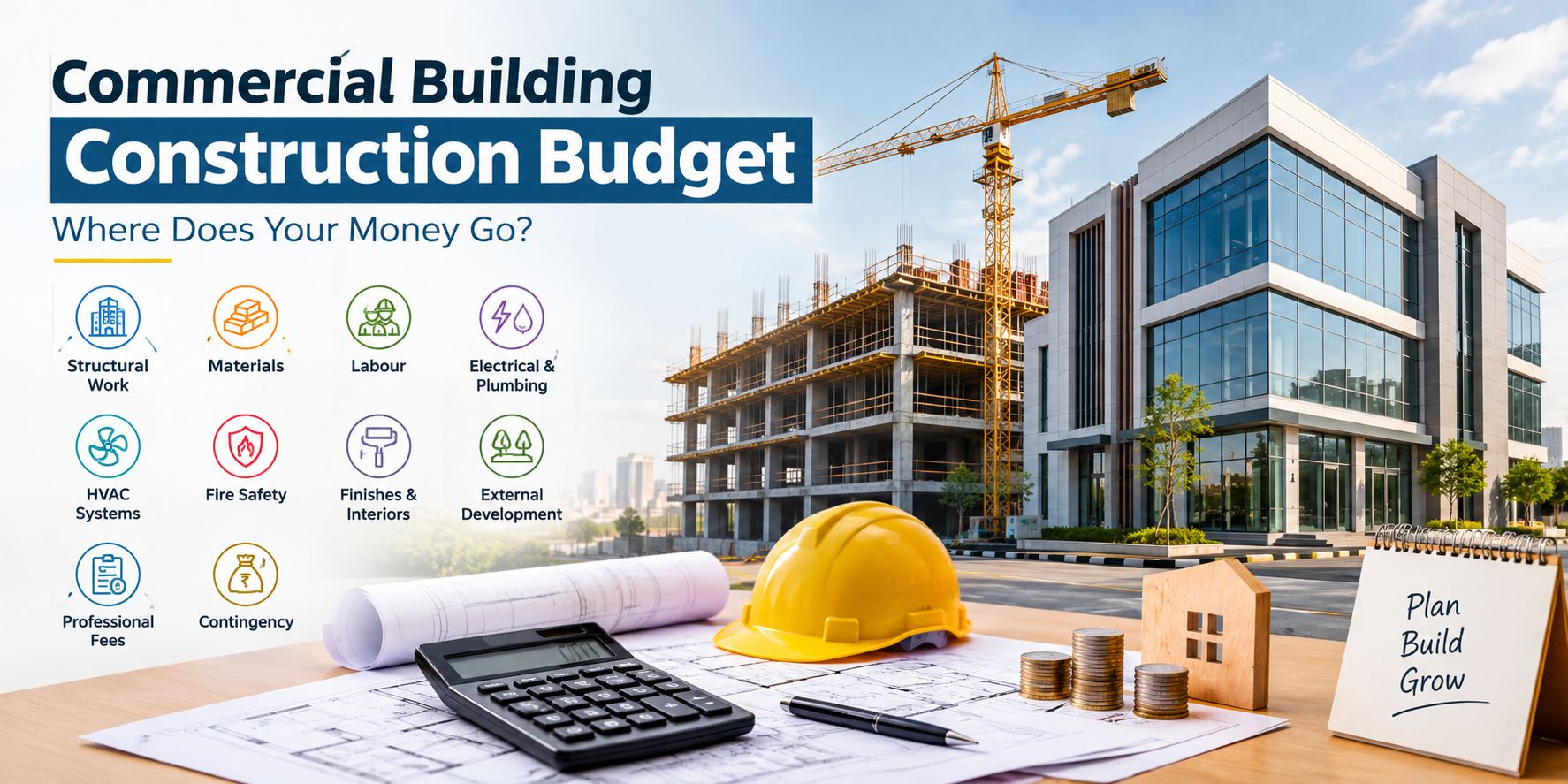
Building a commercial property is a major investment, but do you know where your construction budget actually goes? From the foundation and structural...